

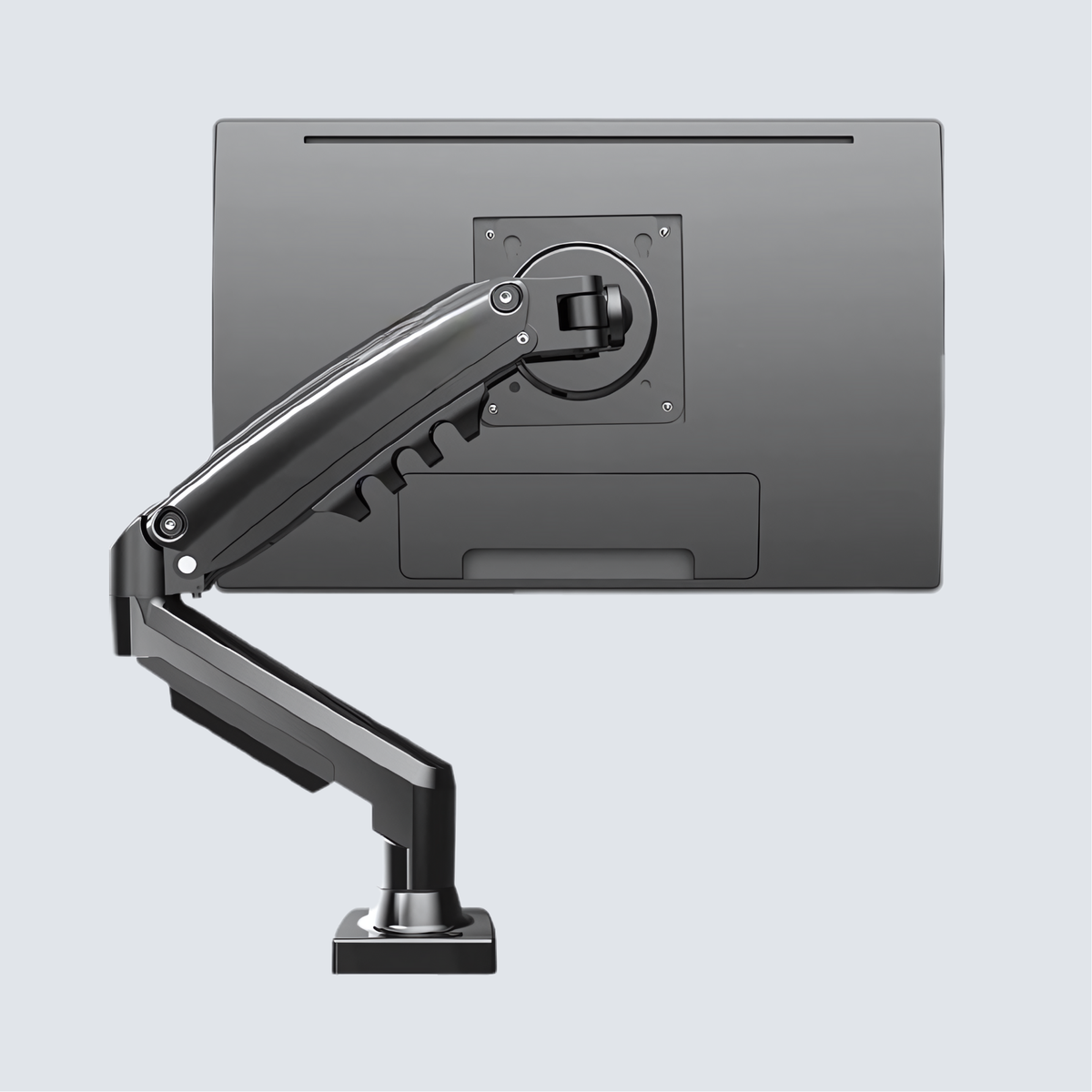
Video Electronics Standards Association popularly known as VESA is a standard hole pattern on the back of flat panel displays such as televisions, digital signage, and computer monitors. This standard is designed to allow for easy mounting of those devices onto a compatible mount, which can be a desk mount, floor stand, ceiling mount, or even a wall mount.
In most instances, the VESA pattern comprises of four screw holes arranged in a rectangular or square patterns. Among the most common VESA mount pattern size you will stumble across on the market today include the 75 mm by 75 mm 100 mm by 100 mm. Of course, there is a variety of larger sizes available for larger displays, such as TVs.
The good thing about investing in a height adjustable monitor stand VESA is that it offers a convenient and standardized way to mount displays. This makes it easier for you to find a compatible mount while also minimizing the risk of damaging the display during installations. No wonder VESA mounts remain a popular choose for most today.
Just as a reminder, a height adjustable monitor stand VESA is simply a type of mount that makes it easy for you to attach your computer monitor to a wall, desk, or any other surface using a VESA-compatible mounting system. The VESA mount system offers a standardized interface for mounting displays, making it easy to find compatible mounts. No to mention the sheer fact that it allows for a secure and stable attachment.
Before investing in a VESA mount, you should always remember that they are available in different types, including adjustable mounts, articulating mounts, and fixed mounts. If you want the most flexible VESA mount, then you should settle for the articulating mount. After all, it allows you to make adjustments to the monitor in multiple directions and angles.
The fixed mount is merely a simple bracket that holds the monitor in a fixed position. Things tend to be different with the height adjustable monitor stand VESA since it allows for tilting or swiveling of the monitor to adjust the viewing angle. Be sure to factor in the pros and cons of each before parting with your hard-earned money.
Before investing in a VESA mount, it is essential that you factor in the size and weight of your monitor. The same goes for the type of mount that will work best for your workspace.